Understanding the Essentials of System Renovation in Sicily
Renovating a property in Sicily, whether it's a historic townhouse in Palermo or a coastal villa near Taormina, involves more than just aesthetic changes. The hidden networks of wires and pipes—the electrical and plumbing systems—are the lifelines of a modern, safe, and comfortable home. For many properties, especially those built several decades ago, a complete system overhaul, or "rifacimento," is not just recommended; it's a critical necessity. Old systems often fail to meet current safety standards, are inefficient, and cannot support the demands of modern appliances and smart technology. Embarking on a home renovation in Sicily provides the perfect opportunity to address these foundational elements, ensuring your property is not only beautiful but also compliant, efficient, and future-proof. This guide provides a comprehensive overview of everything you need to know about electrical and plumbing renovation in Sicily, from navigating complex regulations to understanding costs and embracing new technologies.
Decoding Italian Electrical Standards: The CEI Framework
The backbone of any electrical renovation in Italy is the set of regulations established by the Comitato Elettrotecnico Italiano (CEI). These standards are not merely suggestions; they are legal requirements designed to ensure safety, prevent fires, and guarantee system functionality. Understanding these rules is the first step in a compliant renovation project.
What is the CEI 64-8 Standard?
The primary regulation governing low-voltage electrical systems in residential buildings is the CEI 64-8 standard. This comprehensive document outlines the mandatory requirements for the design, installation, and verification of electrical systems. It covers everything from the type of cables and circuit breakers to the number and placement of outlets in each room. The standard is periodically updated to reflect technological advancements and enhanced safety protocols, making it essential that your renovation is managed by a qualified professional who is up-to-date with the latest version. The goal of CEI 64-8 is to protect people and property from electrical hazards like short circuits, overloads, and electric shock.
Key Electrical Safety Requirements for Homes
Under CEI 64-8, several key safety features are mandatory for any new or fully renovated electrical system:
- Main Circuit Breaker (Interruttore Generale): This is the primary control point for your home's electricity, allowing you to shut off all power in an emergency.
- Residual Current Device (RCD), or "Salva-Vita": This life-saving device is arguably the most important safety feature. It constantly monitors the flow of current and instantly cuts power if it detects a leakage (e.g., due to a faulty appliance or accidental contact), preventing potentially fatal electric shocks.
- Miniature Circuit Breakers (MCBs): Each main circuit (e.g., lighting, kitchen sockets, bedroom sockets) must be protected by its own MCB. These devices protect against overloads and short circuits, preventing wires from overheating and causing fires.
- Proper Earthing (Messa a Terra): A robust earthing system is crucial. It provides a safe path for fault currents to flow to the ground, preventing metal parts of appliances from becoming live in the event of a fault.
- Dedicated Circuits: Modern standards require dedicated circuits for high-power appliances like ovens, induction hobs, and washing machines to prevent overloading general-purpose circuits.
The Importance of the "Dichiarazione di Conformità" (DiCo)
Upon completion of any new electrical installation or significant modification, the certified installer is legally required to issue a Dichiarazione di Conformità (DiCo). This document is your official guarantee that the system was installed in accordance with all applicable CEI standards and safety regulations. The DiCo is a vital document for several reasons:
- Legality and Safety: It certifies that your home is safe from an electrical standpoint.
- Property Sale: It is mandatory when selling a property. A missing or invalid DiCo can significantly complicate or even halt a property transaction.
- Utility Connection: It is required to establish a new electricity supply contract with providers like Enel.
- Insurance: In the unfortunate event of an electrical fire, your insurance company will almost certainly require the DiCo to process a claim.
Never work with an electrician who is unable or unwilling to provide a DiCo. This is a major red flag and suggests they are not a qualified or registered professional. For anyone undertaking a turnkey renovation in Sicily, ensuring your contractor provides all necessary certifications like the DiCo is a fundamental part of the service.
Navigating Plumbing Regulations in Italy
Just like the electrical system, the plumbing network ("impianto idraulico") is governed by a set of rules designed to ensure hygiene, safety, and efficiency. While perhaps less complex than the electrical code, these regulations are equally important for a successful renovation.
National vs. Regional Regulations
Plumbing in Italy is regulated by a combination of national laws, primarily the DM 37/08 (Decreto Ministeriale), and local health and building codes which can vary slightly by municipality. DM 37/08 is the successor to Law 46/90 and establishes the framework for the installation, modification, and maintenance of various systems, including plumbing and heating. It mandates that all work must be carried out by a qualified and registered company, which must issue a Dichiarazione di Conformità (DiCo) for the plumbing system, just as with electrical work.
The "Dichiarazione di Conformità" (DiCo) for Plumbing
The DiCo for the plumbing system certifies that all materials and installation techniques comply with current regulations. This includes ensuring that pipes for potable water are made of non-toxic materials, that drainage systems have proper slopes and ventilation to prevent backflows and odours, and that the system is free of leaks. This certification is essential for the certificate of habitability ("agibilità") of the property and for any future sale.
Water Quality and Material Standards
Regulations place a strong emphasis on protecting the quality of drinking water. This means all pipes, fittings, and fixtures that come into contact with potable water must be certified for that purpose. Materials like multilayer composite pipes (PEX-Al-PEX) and polypropylene (PPR) have become industry standards, replacing older, problematic materials like lead and galvanized iron. These modern materials are durable, resistant to corrosion and scale buildup, and ensure the water remains clean and safe to drink. When planning a bathroom renovation in Sicily, selecting the right materials is as important as choosing the tiles and fixtures.
The Challenge of Renovating Systems in Old Sicilian Buildings
Renovating electrical and plumbing systems in Sicily's historic properties presents a unique set of challenges. These buildings, while full of charm, often have outdated and non-compliant infrastructure that requires careful and expert handling.
Common Issues in Historic Properties
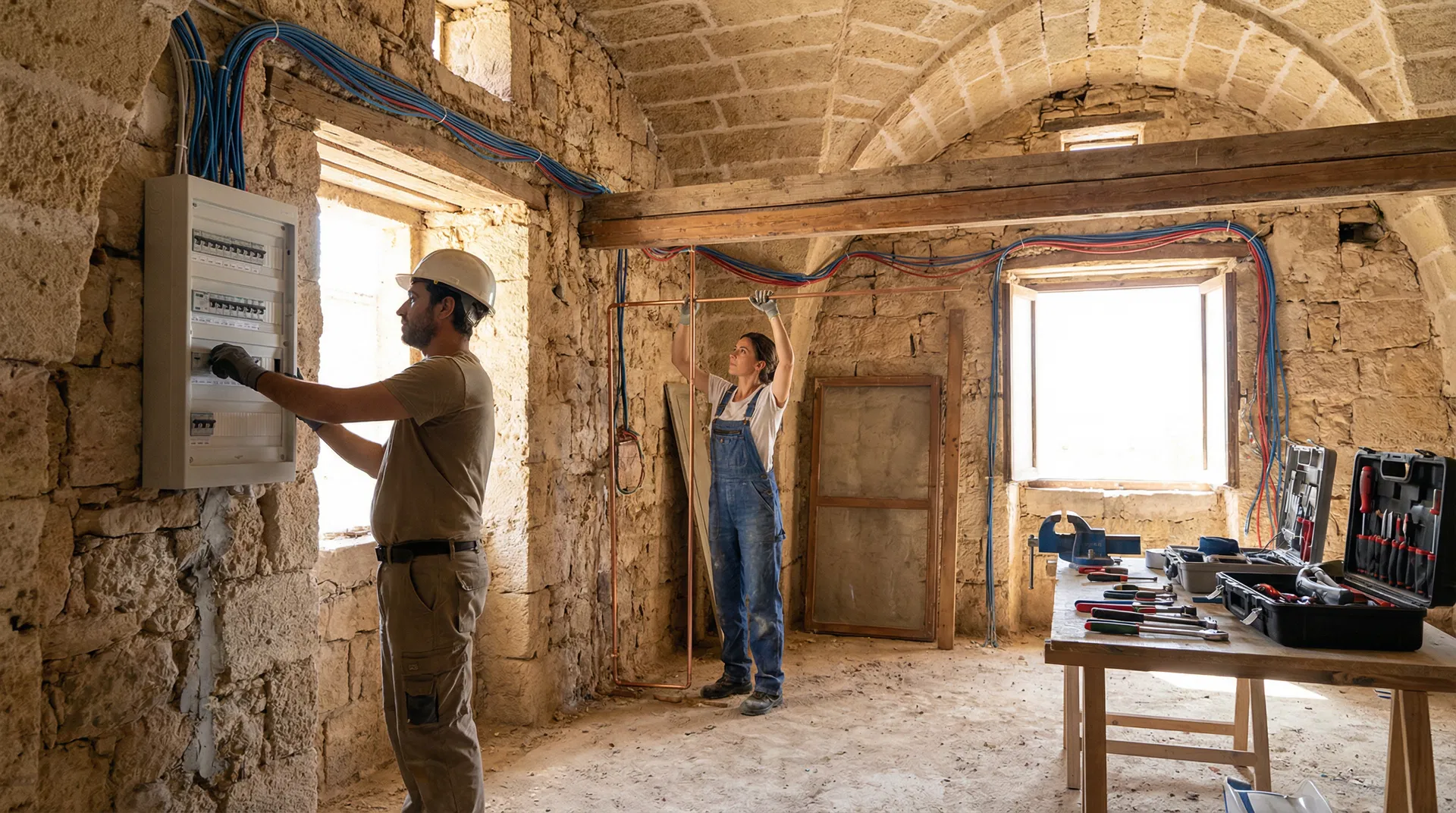
- Outdated Wiring: It's not uncommon to find cloth-insulated wiring, undersized conductors, and a complete lack of an earthing system. Sockets are often few and far between, and the entire system is typically a single circuit, which is both unsafe and impractical for modern living.
- Lead and Iron Pipes: Many older buildings still have plumbing systems made of lead (highly toxic) or galvanized iron (prone to corrosion and blockages). A complete replacement is the only safe and long-term solution.
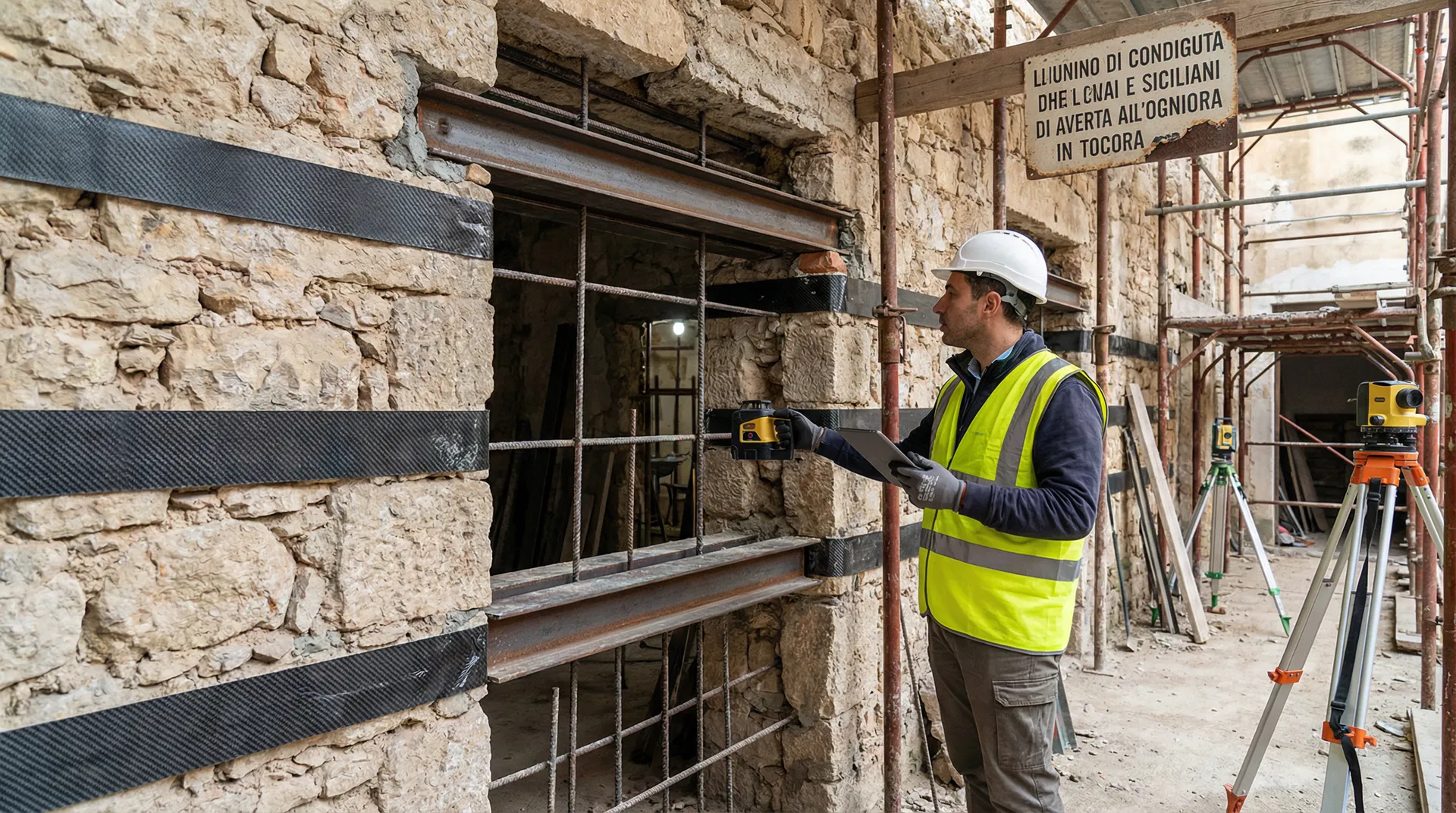
- Structural Constraints: Historic buildings may have thick stone walls, delicate frescoes, or protected architectural features that make routing new pipes and conduits difficult. Any work in a listed building requires careful planning and often approval from the local heritage authority, the Soprintendenza. This is a key consideration when renovating historic properties in Sicily.
- Inaccessible Pipework: Pipes are often embedded deep within walls or under precious original floors, making access for replacement a delicate and sometimes costly operation.
Strategies for a Successful Renovation
Successfully upgrading the systems in an old building requires a strategic approach:
- Thorough Inspection: The first step is a comprehensive diagnostic of the existing systems to identify all deficiencies and potential challenges.
- Integrated Planning: The electrical and plumbing plans must be developed in conjunction with the overall architectural and structural renovation plan. This ensures that new routes for pipes and conduits are planned efficiently and with minimal disruption to the building's historic fabric.
- Surface-Mounted Solutions: In some cases, where chasing into walls is not feasible or desirable, elegant surface-mounted conduit and pipework solutions can be used, becoming a deliberate part of the interior design aesthetic.
- Hiring Specialists: It is crucial to work with a construction company like Terra Nostra Costruzioni, which has proven experience in the renovation of historic Sicilian properties and understands the unique demands of these projects.
Cost of Electrical and Plumbing Renovation in Sicily
Estimating the cost of a complete system renovation is complex, as it depends heavily on the size of the property, the quality of materials chosen, and the complexity of the installation. However, it is possible to provide some general guidelines. The cost is typically calculated based on the number of "punti" (points) – with a "punto luce" being a light switch or fixture, and a "punto presa" being a socket. For plumbing, a "punto acqua" refers to each fixture (sink, toilet, shower, etc.).
Estimated Costs per Room for Electrical Systems
This table provides a rough estimate for a complete electrical renovation in a standard residential property, including labour, materials (cables, conduits, junction boxes, standard-quality plates/switches), and certification.
| Room Type | Average Number of Electrical Points | Estimated Cost Range (€) |
|---|---|---|
| Kitchen | 10 - 15 | €700 - €1,200 |
| Bathroom | 5 - 8 | €400 - €700 |
| Living Room (30m²) | 12 - 18 | €800 - €1,500 |
| Bedroom (15m²) | 6 - 10 | €500 - €850 |
| Full Apartment (100m²) | 60 - 80 | €4,500 - €7,000 |
Note: These prices are indicative and can vary based on location (e.g., renovating in Catania vs. a rural area) and specific project requirements. High-end fixtures or smart home automation will increase the cost. For a more detailed breakdown, exploring the overall costs of renovation in Sicily is highly recommended.
Estimated Costs for Plumbing Systems
Plumbing renovation costs are typically calculated per water point. This includes the installation of hot and cold water supply lines and the corresponding drainage pipe for each fixture.
| Fixture / Area | Estimated Cost per Point (€) | Notes |
|---|---|---|
| Kitchen Sink | €200 - €350 | Includes hot/cold supply and drain. |
| Bathroom (Full) | €1,000 - €1,800 | Includes 4 points: sink, bidet, toilet (drain only), and shower/bath. |
| Washing Machine | €150 - €250 | Includes supply and drain. |
| New Boiler Connection | €300 - €500 | Depends on the type and location of the boiler. |
Note: These costs do not include the price of the fixtures themselves (taps, toilets, sinks), masonry work to open and close walls, or tiling. When planning a kitchen renovation in Sicily, these system costs are a major component of the budget.
Energy Efficiency and Smart Home Upgrades
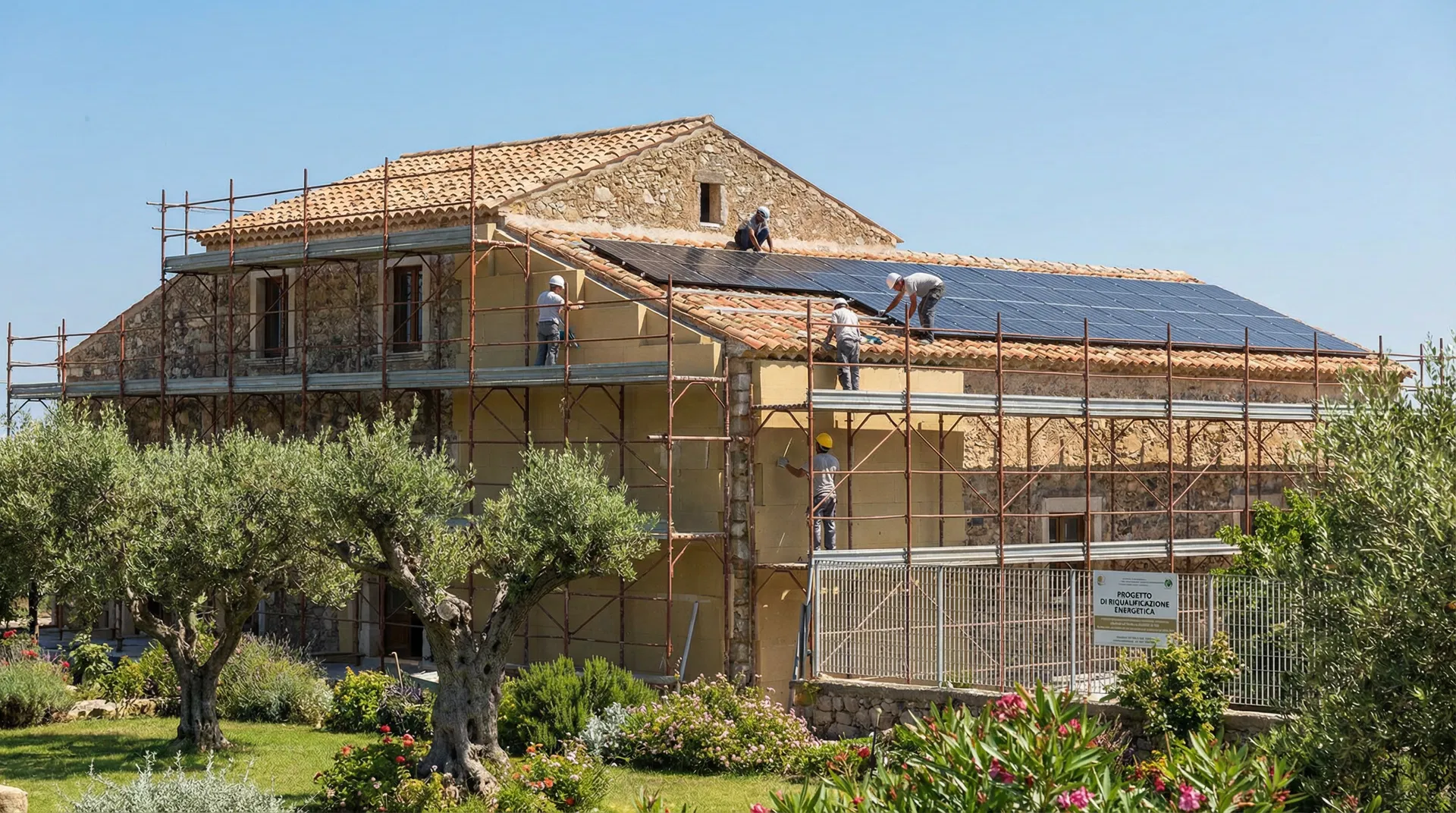
A full system renovation is the ideal time to incorporate modern technologies that enhance comfort, reduce running costs, and increase your property's value. This is a key part of any energy-focused renovation project.
Energy-Efficient Solutions
- LED Lighting: Replacing all old incandescent or halogen bulbs with LED equivalents is a simple but highly effective upgrade. LEDs consume up to 85% less energy and have a much longer lifespan.
- Modern Heat Pump Boilers: A heat pump water heater (scaldabagno a pompa di calore) is an incredibly efficient alternative to a standard electric boiler, using heat from the air to warm the water and cutting electricity consumption for hot water by up to 75%.
- Solar Thermal Systems: Sicily's abundant sunshine makes it a prime location for solar thermal panels, which can provide a significant portion of your hot water needs for free, further reducing your reliance on the grid.
Integrating Smart Home Technology
With new wiring in place, integrating smart home features becomes simple and relatively inexpensive. Consider these popular options:
- Smart Lighting: Control your lights remotely via a smartphone app, set schedules, and create lighting scenes. Systems like Philips Hue or simpler Wi-Fi-enabled switches can be easily installed.
- Smart Thermostats: A smart thermostat learns your habits and optimises your heating and cooling schedules to save energy. It also allows you to control the temperature remotely—perfect for a holiday home.
- Home Automation Hubs: A central hub (like Amazon Alexa, Google Home, or Apple HomeKit) can unify control of your lighting, heating, security cameras, and even smart appliances, allowing for voice control and complex automation routines.
- Video Doorbells and Security: Enhance your home's security with smart doorbells and cameras that you can monitor from anywhere in the world.
FAQ: Electrical and Plumbing Renovation in Sicily
How long does a complete electrical and plumbing renovation take?
For a typical 100m² apartment, a full renovation of both systems, including chasing walls, laying pipes and conduits, and finishing, usually takes between 2 to 4 weeks. This timeline does not include the initial design phase or subsequent finishing work like plastering and tiling.
Do I need a building permit for this type of work?
Yes. A complete renovation of electrical and plumbing systems is considered "manutenzione straordinaria" (extraordinary maintenance) and requires a formal building permit, typically a CILA (Comunicazione di Inizio Lavori Asseverata). This is a process your architect or project manager will handle. For more information, read our guide to Italian building permits.
Can I do some of the work myself to save money?
No. In Italy, it is illegal for anyone other than a certified and registered professional to work on electrical and gas systems. For plumbing, while minor repairs are permissible, any significant work requires a certified plumber. Attempting DIY work will void your ability to get the mandatory "Dichiarazione di Conformità" (DiCo), creating major legal and safety issues.
What is the difference between a "punto luce" and a "punto presa"?
A "punto luce" refers to any point that controls a light, such as a switch, dimmer, or the light fixture point itself. A "punto presa" refers to a socket outlet where you plug in appliances. The cost calculation is often based on the total number of these "points" in the project.
Is it worth installing a smart home system during the renovation?
Absolutely. The cost of adding the necessary wiring for a basic smart home system during a full renovation is minimal compared to retrofitting it later. It adds significant value, convenience, and energy efficiency to your property, making it a wise investment for the future.
Undertaking a full electrical and plumbing renovation is a significant but essential investment in the safety, comfort, and value of your Sicilian property. By understanding the regulations, planning carefully, and working with qualified professionals, you can ensure your home is perfectly equipped for modern life. If you are ready to begin your renovation journey in Sicily, contact Terra Nostra Costruzioni today to discuss your project with our team of experts.
Ready to Start Your Project?
Contact Terra Nostra Costruzioni for a free consultation. We provide bilingual project management for renovation projects across Sicily.
Ask AI About This Topic
Get instant AI-powered answers about Structural Work
These links open external AI platforms with a pre-filled question about this topic.