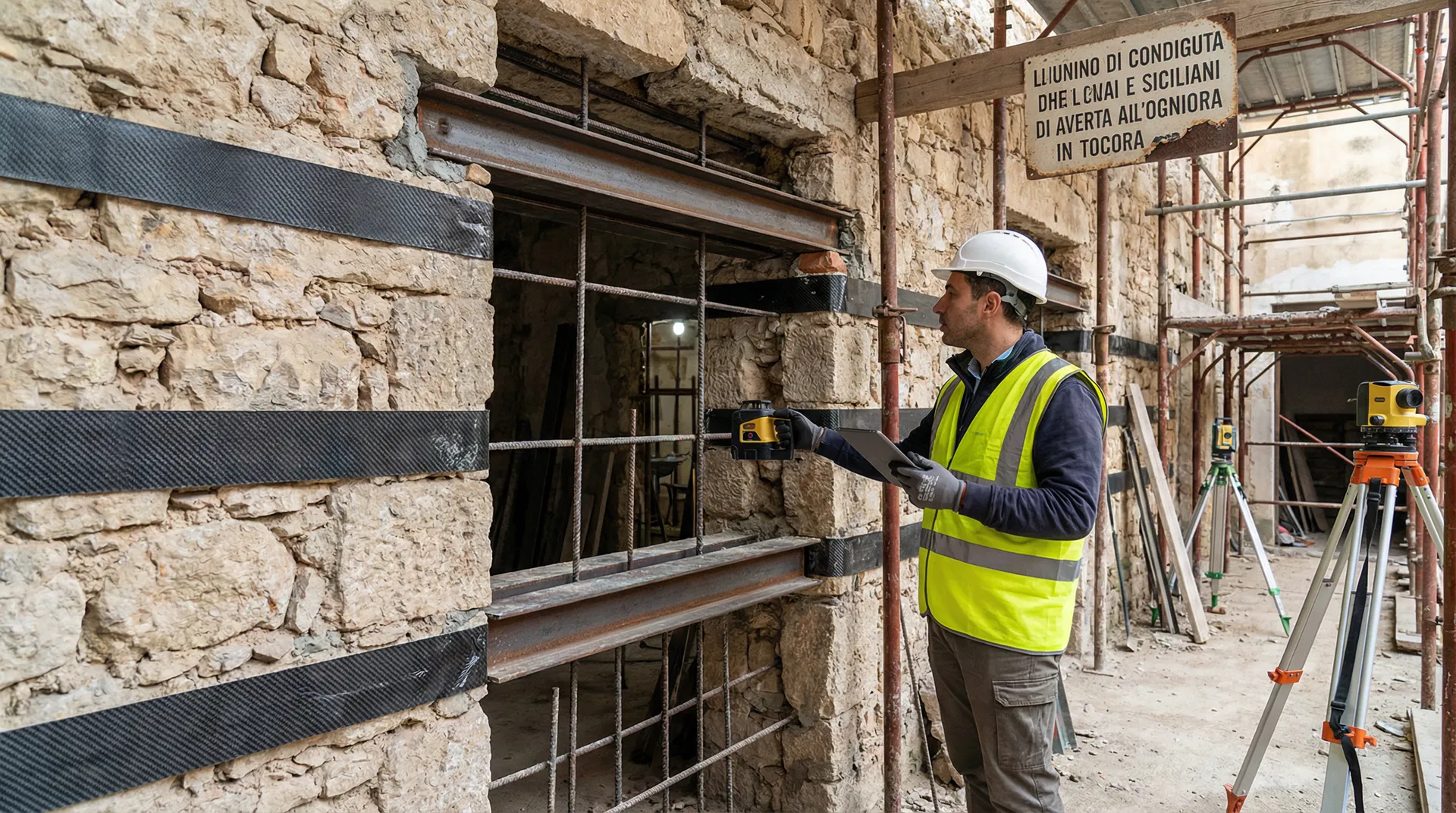
Navigating the labyrinth of Italian bureaucracy is often the first challenge for those dreaming of renovating a property in Sicily. Understanding the local building permits is not just a legal formality; it is the foundational step that ensures your project is compliant, safe, and successful. This guide provides a comprehensive overview of the primary Italian building permits, focusing on the CILA and SCIA, to help you confidently embark on your renovation journey in beautiful Sicily. Whether you are planning minor updates to a city apartment in Palermo or a full restoration of a rustic villa near Taormina, knowing which permit to apply for is crucial.
Demystifying Italian Building Permits: CILA, SCIA, and Permesso di Costruire
In Italy, any construction or renovation work is subject to specific regulations outlined in the 'Testo Unico dell'Edilizia' (D.P.R. 380/2001). The system categorises works into different levels of complexity, each requiring a specific type of permit or communication. The three main tiers you will encounter are the CILA, the SCIA, and the 'Permesso di Costruire'. Understanding the distinction is essential for anyone, especially foreign buyers, looking to invest in Sicilian property. For a broader overview of the purchasing and renovation process, our guide for foreign buyers renovating in Sicily offers valuable insights.
The CILA (Comunicazione di Inizio Lavori Asseverata) is the simplest procedure, designed for 'edilizia libera' or minor maintenance that does not involve structural changes. The SCIA (Segnalazione Certificata di Inizio Attività) covers more substantial renovations, such as moving internal walls or updating utilities, but still falls short of major structural alterations. Finally, the 'Permesso di Costruire' (Permit to Build) is required for new constructions, significant extensions, or any work that alters the building's volume, structure, or external appearance. Each permit has its own application process, timeline, and associated costs, which we will explore in detail.
When is a CILA (Comunicazione Inizio Lavori Asseverata) Required?
The CILA is your go-to permit for most interior cosmetic updates. It was introduced to simplify the process for non-structural work, allowing homeowners to proceed quickly with their projects. A qualified technician, such as a 'geometra' or architect, must prepare and submit the CILA to the local council's 'Sportello Unico per l'Edilizia' (SUE). The key feature of the CILA is that work can commence on the same day the communication is filed. This is because it is an 'asseverata' communication, meaning the technician assumes responsibility for the project's compliance with local building and hygiene regulations.
Typical projects that fall under the CILA category include renewing or replacing flooring, plastering and painting walls, replacing bathroom and kitchen fixtures without altering the plumbing layout, and creating new internal openings that are not in structural walls. It is the ideal permit for refreshing an apartment in Catania or updating the interiors of a holiday home in Siracusa. While it is a straightforward process, it is not a DIY task. The sworn statement from a professional is non-negotiable and ensures that even minor works adhere to safety standards. For those considering a complete refresh, our guide to bathroom renovation costs in Sicily can provide a detailed cost perspective.
The SCIA (Segnalazione Certificata di Inizio Attività): A Deeper Dive
The SCIA is required for what is termed 'manutenzione straordinaria' or extraordinary maintenance. This category includes renovations that involve modifying parts of the building, even if they are not structural. The most common use for a SCIA is for projects that involve reconfiguring the internal layout of a property by moving, creating, or demolishing non-load-bearing walls. It also covers the renewal or modification of essential utilities, such as plumbing, electrical, and heating systems.
Unlike the CILA, the SCIA process involves a 30-day review period. Once your architect or 'geometra' submits the certified report to the SUE, the municipality has 30 days to review the documentation and raise any objections. If no feedback is received within this timeframe, the 'silenzio-assenso' (silent consent) principle applies, and you are free to begin the renovation. This permit is essential for projects like converting a large traditional apartment in Palermo into smaller units or undertaking a complete turnkey renovation in Sicily. The technical report for a SCIA is more detailed than for a CILA, requiring comprehensive plans, descriptions of the work, and a statement confirming compliance with all relevant building, seismic, and energy efficiency regulations.
Navigating the 'Permesso di Costruire' for Major Works
For ambitious projects, the 'Permesso di Costruire' (PdC) is the necessary authorisation. This permit is reserved for new constructions, significant enlargements of existing properties, and any work that fundamentally changes the building's structure, volume, or external facade. If you are planning to build a new villa, add a substantial extension to your home, or make significant structural alterations to a historic building, you will need a PdC. This is the most complex and time-consuming permit to obtain.
The application for a 'Permesso di Costruire' is a comprehensive dossier that includes detailed architectural and engineering plans, structural calculations, geological surveys, and evidence of compliance with a wide range of urban planning, environmental, and heritage regulations. The local council has 60 days to review the application, a period that can be extended if further documentation is requested. Given the complexity, engaging a skilled team, including an architect and a structural engineer, from the very beginning is paramount. For those interested in building from the ground up, our complete guide to building a new house in Sicily provides an in-depth look at the process.
Cost and Timeline Comparison: CILA vs. SCIA in Sicily
Understanding the financial and time commitments for each permit is crucial for effective project planning. The costs can be broken down into municipal fees and professional fees. While municipal fees are relatively low, the bulk of the cost comes from hiring the necessary professionals to prepare and certify the documentation. The following table provides an estimated comparison for a standard residential renovation in Sicily.
| Permit Type | Average Timeline | Estimated Municipal Fees (EUR) | Estimated Professional Fees (EUR) |
|---|---|---|---|
| CILA | 1-2 weeks (work can start immediately) | €50 - €250 | €800 - €2,000 |
| SCIA | 30-60 days (including 30-day review) | €250 - €1,000 | €2,500 - €5,000 |
| SCIA Alternativa al PdC | 60-90 days | €1,000 - €3,000 | €4,000 - €8,000 |
| Permesso di Costruire | 4-12 months+ | Based on project value | €8,000 - €20,000+ |
Disclaimer: These costs are estimates and can vary significantly based on the project's complexity, location in Sicily, and the professionals hired. Always request detailed quotes. For a more granular look at project expenses, exploring a detailed breakdown of renovation costs in Sicily is highly recommended.
The Role of the Geometra, Architect, and Engineer
Successfully navigating the Italian permit process is impossible without the right professional team. Each role plays a distinct and vital part in your renovation project. A 'geometra' is a unique Italian professional, a surveyor who can handle a wide range of tasks, including property surveys, CILA and SCIA applications, and site supervision for smaller projects. They are often more affordable than architects and are an excellent choice for straightforward renovations.
An architect ('architetto') is essential for projects involving design, aesthetics, and more complex spatial planning. They are required for SCIA applications involving significant layout changes and are mandatory for any project needing a 'Permesso di Costruire'. An engineer ('ingegnere'), particularly a structural engineer, is required for any work that affects the building's structural integrity, including load-bearing walls, foundations, and roofs. The following table outlines the typical fees for these professionals in Sicily.
| Professional | Typical Fee Structure | Estimated Cost Range (EUR) for a €100k Project |
|---|---|---|
| Geometra | Fixed fee or % of project cost (4-8%) | €4,000 - €8,000 |
| Architect | Percentage of project cost (8-12%) | €8,000 - €12,000 |
| Engineer | Fixed fee for calculations or % of structural works | €3,000 - €7,000 |
Finding the right professionals is key. Our guide on working with Sicilian architects as a foreign client offers practical advice on collaboration and communication.
Common Pitfalls and How to Avoid Delays
Even with professional help, the permit process can encounter obstacles. A common issue is the discovery of 'abuso edilizio' – unrecorded past works that do not match the official floor plans filed at the 'catasto' (Land Registry). Before any new permit can be approved, these discrepancies must be rectified through a 'sanatoria', a process of legalising the unauthorised work, which involves fines and new paperwork. Always conduct a thorough due diligence check before purchasing a property.
Another pitfall is underestimating the influence of the 'Soprintendenza per i Beni Culturali e Ambientali', the authority for cultural heritage. If your property is in a historic centre ('centro storico') or is a listed building, any external modification will require their approval, adding significant time and complexity to your project. Delays can also arise from incomplete documentation or disagreements between the council's technicians and your own. Clear communication and meticulous preparation are your best defences against these common problems.
Renovating Historic Properties: Special Considerations
Sicily is rich with historic properties, from Baroque palazzi in Noto to ancient 'bagli' in the countryside. Renovating these buildings is a rewarding but challenging endeavour that comes with a unique set of rules. Any property subject to a 'vincolo storico' (heritage protection) falls under the jurisdiction of the 'Soprintendenza'. This means that in addition to the standard municipal permits (CILA, SCIA, or PdC), you must also obtain a 'nulla osta' (authorisation) from them.
The 'Soprintendenza' is focused on preserving the historical and architectural integrity of the building. They will scrutinise your plans to ensure that materials, techniques, and aesthetic choices are in keeping with the property's character. This often means using traditional materials like Sicilian terracotta tiles and local stone, and adhering to strict guidelines for window frames, facade colours, and roof repairs. The process can be lengthy, but it is essential for protecting Sicily's unique heritage. Our dedicated guide to renovating historic properties in Sicily provides a more detailed exploration of this topic.
Frequently Asked Questions (FAQ) about Italian Building Permits
Do I need a permit to paint my house in Italy?
For interior painting, you generally do not need a permit as it falls under 'edilizia libera'. However, for exterior painting, especially in a historic centre or a condominium, a CILA or even a SCIA might be required to comply with local 'piano colore' (colour plan) regulations.
How long does it take to get a SCIA in Sicily?
The official timeline is 30 days. Your technician files the SCIA, and if the municipality does not respond with objections within 30 days, you can legally begin work under the 'silent consent' rule. However, the preparation of the detailed technical report by your 'geometra' or architect can take a few weeks prior to submission.
What happens if I do work without a permit in Italy?
Undertaking work without the correct permit is a criminal offence known as 'abuso edilizio'. It can result in hefty fines (often double the value of the work), a legal order to demolish the unauthorised works, and significant complications when you eventually try to sell the property. It is never worth the risk.
Can I manage the permit process myself from abroad?
No, it is not possible. Italian law requires that all permit applications (CILA, SCIA, PdC) are prepared, sworn, and submitted by a qualified and registered technician (geometra, architect, or engineer) licensed to practice in Italy. You will need to hire a local professional to act on your behalf.
What is a 'sanatoria' and when do I need one?
A 'sanatoria' is a legal procedure to regularise unauthorised construction work that was carried out in the past. If a property has discrepancies between its actual state and the official plans on file, you must apply for a 'sanatoria' to make it compliant before you can get a new permit or sell the property.
Are there grants available for renovations in Sicily?
Yes, Italy frequently offers various tax deductions and bonuses for renovations, such as the 'Bonus Ristrutturazione' and 'Ecobonus' for energy efficiency upgrades. These incentives change regularly, so it is crucial to consult with your accountant ('commercialista') and renovation team to see which bonuses your project may qualify for.
Embarking on a renovation in Sicily is an exciting venture. By understanding the permit system and working with a team of trusted local professionals, you can navigate the process smoothly and bring your vision to life. If you are ready to start your project, our team can provide the expertise and support you need, from initial designs and permit applications to managing the entire construction process.
Ready to Start Your Project?
Contact Terra Nostra Costruzioni for a free consultation. We provide bilingual project management for renovation projects across Sicily.
Ask AI About This Topic
Get instant AI-powered answers about Permits
These links open external AI platforms with a pre-filled question about this topic.