The Enduring Beauty of Sicilian Maiolica
The vibrant, hand-painted maiolica tiles of Sicily are more than just a flooring material; they are a testament to the island's rich and complex history. From the opulent palaces of Palermo to the rustic charm of countryside homes, these ceramic treasures have been a hallmark of Sicilian design for centuries. Their intricate patterns and vivid colours tell stories of cultural fusion, reflecting Greek, Arab, Norman, and Spanish influences.
For homeowners undertaking a historic renovation in Sicily, preserving or restoring these floors is often a top priority. It’s a process that connects the property to its past and ensures its unique character endures. This guide provides a comprehensive overview of everything you need to know about restoring Sicilian maiolica floors, from understanding their history to finding the right artisans for the job.
A Journey Through the History of Sicilian Ceramics
The story of Sicilian ceramics is as old as the island itself, but the tradition of maiolica flooring truly blossomed during the Arab and subsequent Spanish rule. The Arabs introduced the tin-glazing technique, which created the brilliant, opaque white background perfect for intricate decoration. This technique, later refined by the Spanish, gave birth to the azulejos (tiles) that would become synonymous with Sicilian architecture.
Two towns, in particular, stand as pillars of this artistic heritage:
- Caltagirone: Often called the "City of Ceramics," Caltagirone in the province of Catania has been a powerhouse of ceramic production since the Middle Ages. Its artisans are renowned for their use of a vibrant palette, typically featuring deep blues, antique yellows, and manganese greens. The town's famous 142-step staircase, the Scalinata di Santa Maria del Monte, is a breathtaking showcase of its ceramic artistry, with each step riser adorned with unique, hand-painted tiles.
- Santo Stefano di Camastra: Located on the northern coast in the province of Messina, this town was rebuilt in the late 17th century after a landslide and quickly established itself as a major ceramics hub. Its style is often characterized by a fiery orange-red base, with delicate, swirling patterns in white and blue.
Understanding the provenance of your tiles can be a fascinating journey into your home's past and a crucial first step in the restoration process.
Identifying and Assessing Traditional Maiolica Tiles
Before any restoration work can begin, it's essential to identify the type and condition of your tiles. Original antique maiolica tiles are typically thicker and more irregular than modern reproductions. Their hand-painted nature means that no two tiles are exactly alike, and you may notice slight variations in colour and pattern.
Common issues you might encounter include:
- Surface Wear: Centuries of foot traffic can lead to faded patterns and a loss of the original glaze.
- Cracks and Chips: Physical impacts can cause hairline cracks or larger chips, compromising the tile's integrity.
- Staining: Porous areas where the glaze has worn away can absorb dirt and liquids, leading to discoloration.
- Loose or Hollow Tiles: The original mortar bed can degrade over time, causing tiles to become loose or produce a hollow sound when tapped.
A professional assessment is crucial. An experienced artisan can determine the extent of the damage and recommend the most appropriate course of action, distinguishing between tiles that can be restored in-situ and those that need to be carefully lifted and replaced. This is particularly important when dealing with protected buildings, where consultation with the Soprintendenza for Cultural Heritage is mandatory.
The Art of Restoration: Techniques and Processes
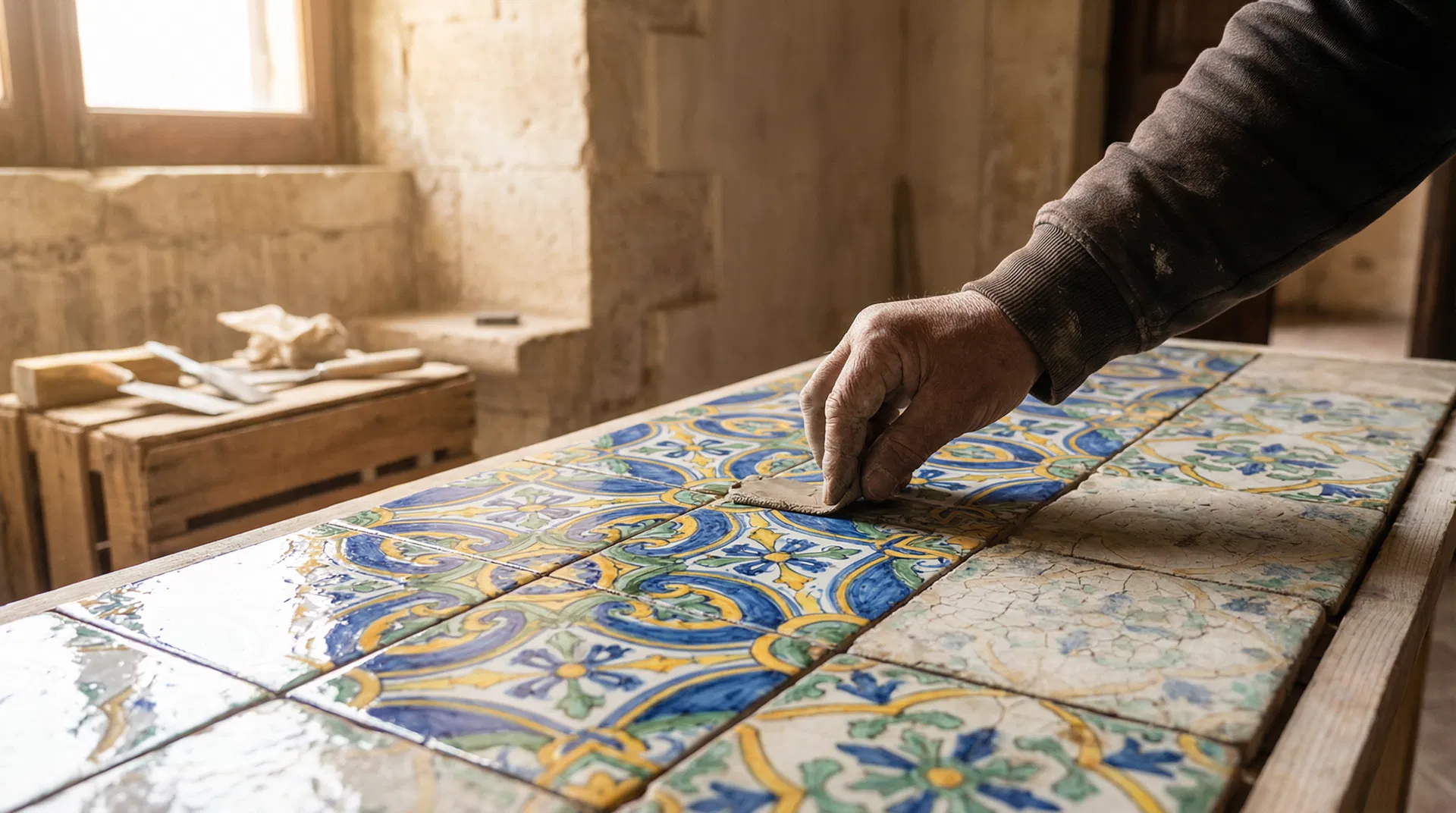
Restoring maiolica floors is a delicate art that blends traditional craftsmanship with modern conservation techniques. The goal is always to preserve as much of the original material as possible.
In-Situ Restoration
For tiles with minor wear, surface-level cleaning and re-glazing can work wonders. The process typically involves:
- Deep Cleaning: Using pH-neutral detergents to remove accumulated dirt without damaging the ceramic.
- Stain Removal: Applying specialized poultices to draw out deep-set stains.
- Minor Repairs: Filling small chips and cracks with colour-matched epoxy resins.
- Re-glazing/Sealing: Applying a protective sealant to enhance durability and restore a subtle sheen, protecting the delicate painted surface underneath.
Lifting and Re-laying
For floors with significant damage, loose tiles, or structural issues, a more intensive approach is required. This involves carefully numbering each tile, lifting them from the floor, and cleaning both the tiles and the subfloor. Damaged tiles are repaired or replaced, and the entire floor is then re-laid on a new, stable mortar bed.
| Restoration Technique | Best For | Average Cost (per sq. m.) | Complexity |
|---|---|---|---|
| Cleaning & Sealing | Minor wear, faded glaze | €50 - €90 | Low |
| In-Situ Repair & Polishing | Scratches, small chips | €80 - €150 | Medium |
| Lifting & Re-laying | Major damage, loose tiles | €150 - €300+ | High |
| Full Replacement | Irreparable damage | Varies widely | Very High |
Note: Costs are estimates and can vary based on the project's complexity, location, and the artisan's expertise.
Sourcing Authentic Tiles and Modern Reproductions
When original tiles are damaged beyond repair, finding suitable replacements is key to a seamless restoration. There are two main avenues: sourcing authentic antique tiles or commissioning high-quality modern reproductions.
Finding Authentic Antique Tiles
Sourcing original, salvaged maiolica tiles requires patience and a good network. These tiles can be found at:
- Reclamation Yards: Specialised dealers across Sicily salvage materials from demolished or renovated properties.
- Antique Markets: Markets in cities like Noto and Ragusa can sometimes yield hidden gems.
- Online Marketplaces: Websites dedicated to architectural salvage can be a valuable resource, though shipping costs can be high.
High-Quality Modern Reproductions
When authentic tiles are unavailable, commissioning reproductions from a skilled artisan is the next best option. Modern artisans in Caltagirone and Santo Stefano di Camastra still use traditional techniques to create tiles that are nearly indistinguishable from the originals. They can replicate specific historical patterns and colours to match your existing floor perfectly. This is often the preferred method for completing a floor, especially in areas like a newly renovated kitchen or bathroom.
| Tile Source | Pros | Cons | Average Cost (per tile) |
|---|---|---|---|
| Authentic Antique | Perfect historical match, unique character | Hard to find, often expensive, may have wear | €20 - €100+ |
| Modern Reproduction | Custom-made, consistent quality, readily available | Lacks the patina of age, can be costly for complex designs | €15 - €60 |
Finding the Right Artisan for Your Project
Choosing the right craftsperson is the most critical decision in your restoration journey. Look for an artisan or a company with proven experience in restoring historic maiolica floors. Ask for a portfolio of their work and references from previous clients.
A good artisan will not only possess the technical skills but also a deep respect for the historical and cultural value of the material. They will work meticulously to preserve the floor's authenticity while ensuring its longevity for generations to come.
At Terra Nostra Costruzioni, we have a network of trusted artisans who specialize in the restoration of historic Sicilian properties. We understand the delicate balance between preservation and modernization required for a successful historic renovation.
Frequently Asked Questions (FAQs)
How long does it take to restore a maiolica floor?
Restoration timelines vary greatly. A simple clean and seal of a 20 sq. m. room might take 2-3 days, while a full lift and re-lay could take 2-3 weeks, not including the time to source or create replacement tiles.
Can I restore a maiolica floor myself?
While minor cleaning can be a DIY task, most restoration work should be left to professionals. The risk of causing irreparable damage to these historic tiles is high, and the techniques require specialized knowledge and tools.
Are restored maiolica floors durable?
With proper care and a high-quality sealant, a restored maiolica floor is perfectly suitable for everyday use. They are a common and beloved feature in both kitchens and bathrooms across Sicily.
How do I clean my restored maiolica floor?
To maintain your floor's beauty, use only pH-neutral cleaners and avoid abrasive sponges or harsh chemicals. Regular sweeping and mopping with a soft cloth and gentle detergent is all that is needed.
Restoring a Sicilian maiolica floor is more than just a construction task; it is an act of cultural preservation. It is an investment in the soul of your property, ensuring its story continues to be told for many years to come. If you are considering a renovation project involving historic tiles, we invite you to contact us to discuss how we can help you bring your vision to life.
Ready to Start Your Project?
Contact Terra Nostra Costruzioni for a free consultation. We provide bilingual project management for renovation projects across Sicily.
Ask AI About This Topic
Get instant AI-powered answers about Heritage & History
These links open external AI platforms with a pre-filled question about this topic.