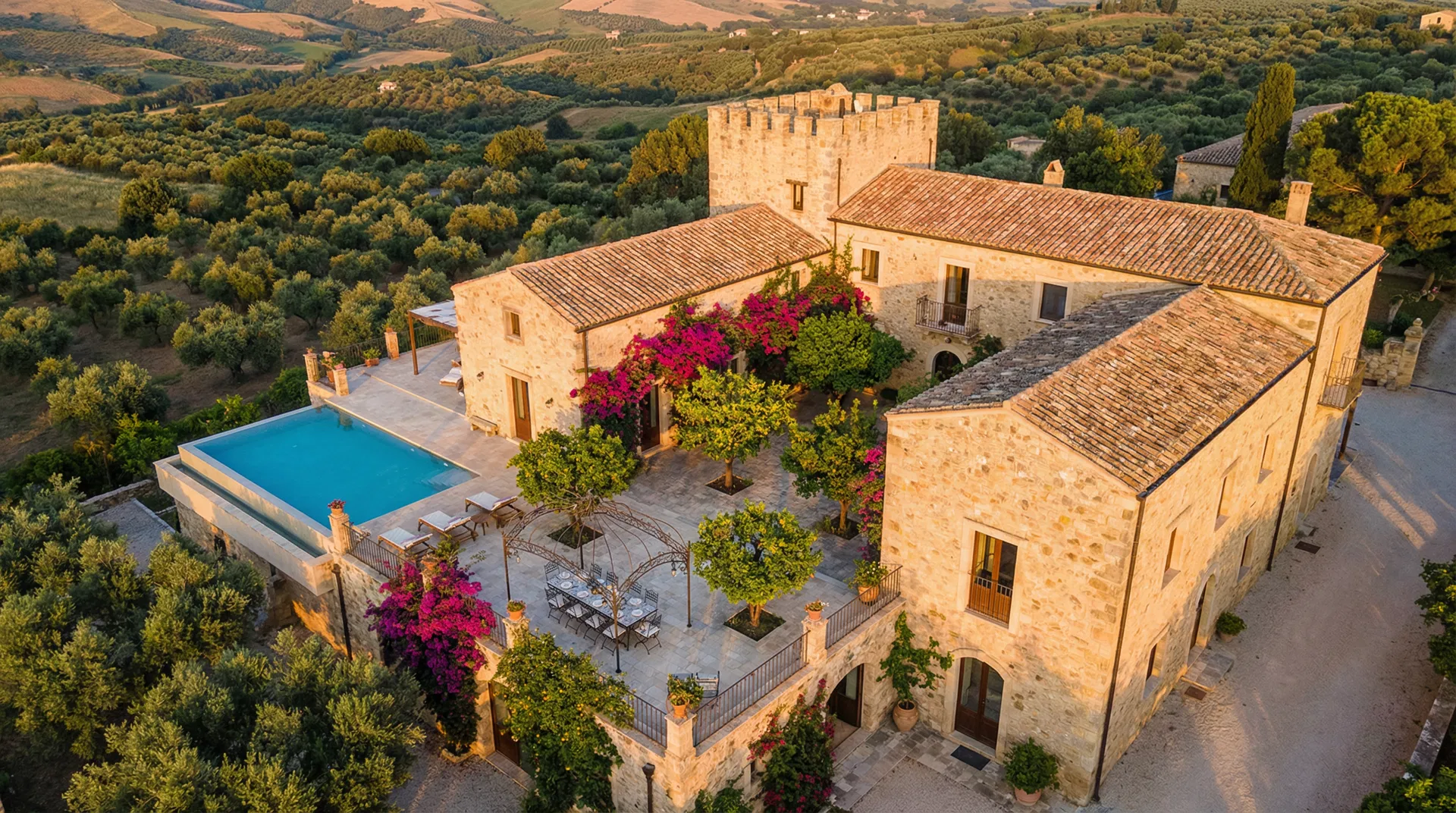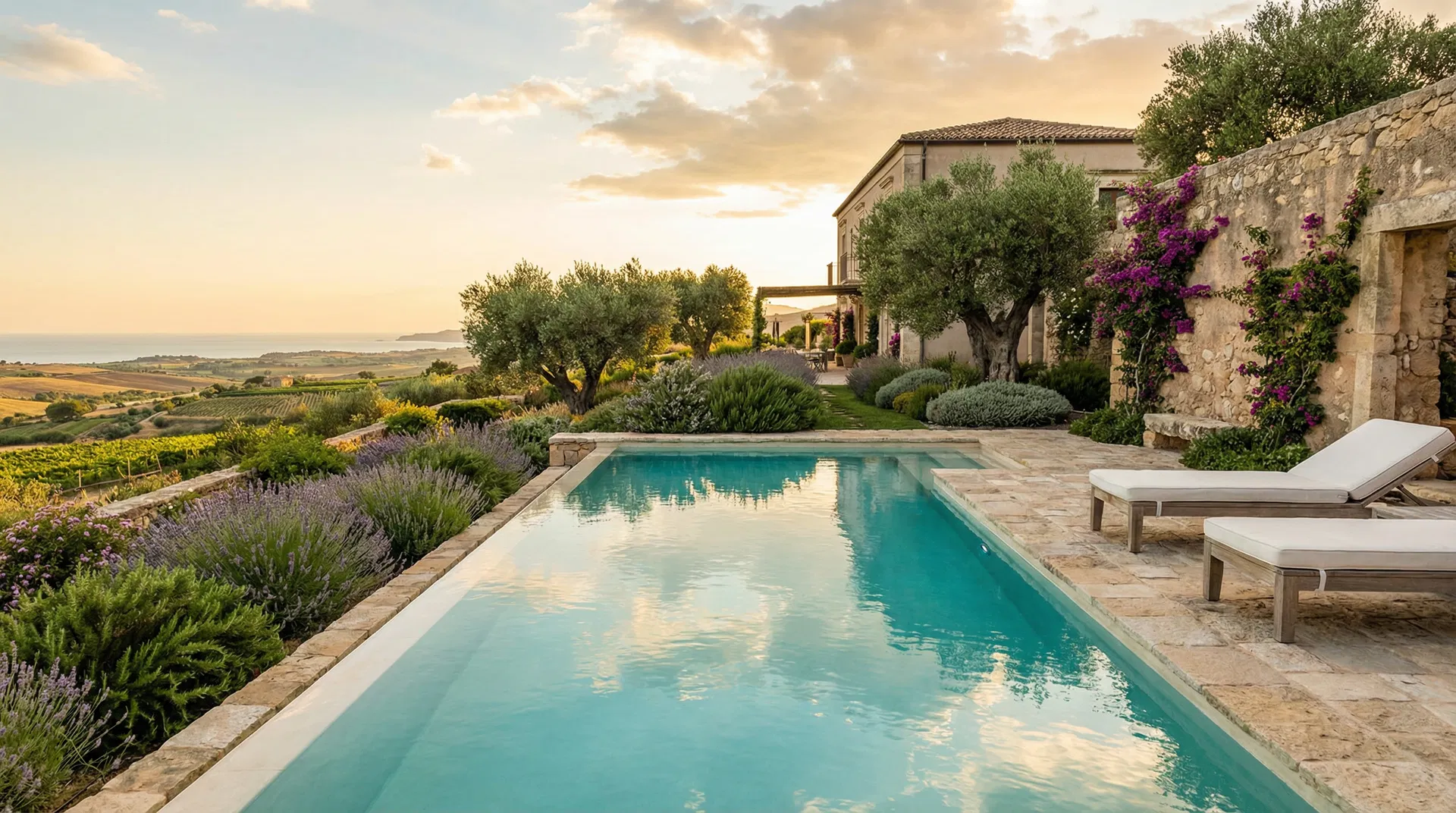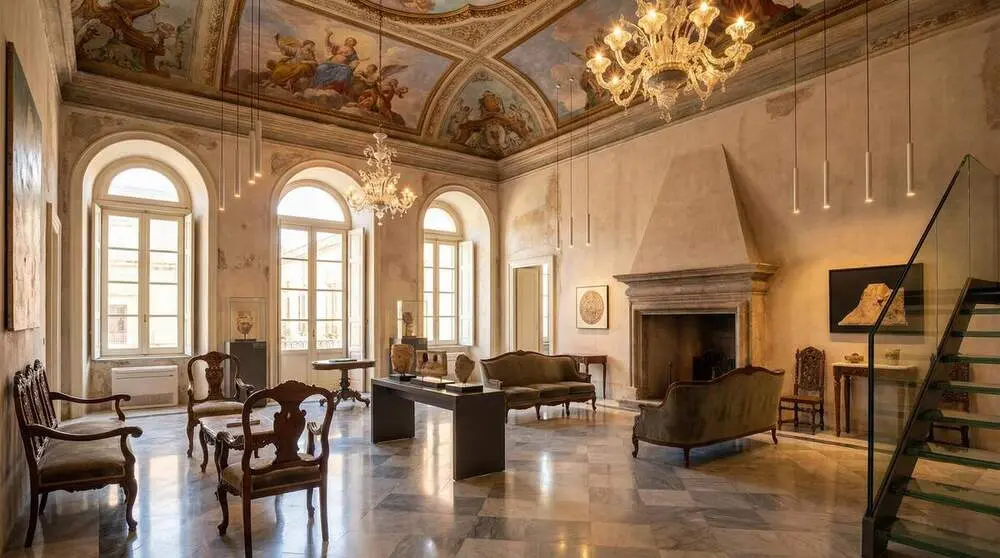
Renovating a historic property in Sicily is a dream for many, an opportunity to own a piece of the island’s rich, layered history. From Baroque palazzi in Noto to ancient farmhouses, or ‘bagli’, in the countryside, these buildings offer a unique connection to the past. However, this dream comes with a significant responsibility. The process is governed by the Soprintendenza ai Beni Culturali e Ambientali, the regional authority tasked with protecting Sicily’s immense cultural and architectural heritage. Navigating their requirements is the single most critical aspect of any historic renovation Sicily project. This guide provides a comprehensive overview of how to work successfully with the Soprintendenza, ensuring your restoration project not only meets legal standards but also honours the building's authentic character.
Understanding the Soprintendenza: Who Are They and What Do They Do?
The Soprintendenza is the gatekeeper of Sicilian heritage. It is a peripheral office of the Italian Ministry of Culture (Ministero della Cultura) and is responsible for safeguarding everything from archaeological sites to historic buildings and landscapes. Their mission is to ensure that any intervention on a protected property is carried out with the utmost respect for its historical, artistic, and architectural integrity. Their authority is enshrined in the 'Codice dei beni culturali e del paesaggio' (Legislative Decree 42/2004), the national law governing cultural heritage. In Sicily, the Soprintendenza operates on a provincial level, with offices in major cities like Palermo, Catania, and Siracusa, each overseeing its respective territory. Their role is not to prevent renovation, but to guide it, ensuring that modern needs are met in a way that is compatible with historic preservation. They review project proposals, grant authorisations (nulla osta), and oversee the work to ensure compliance.
Is Your Sicilian Property under Soprintendenza Protection?
Before you even consider purchasing a property, you must determine if it falls under the Soprintendenza’s jurisdiction. The rules are complex, but there are some clear indicators. Any building over 70 years old whose ownership is public or belongs to a non-profit legal entity is automatically checked for cultural interest. For privately owned properties, a specific declaration of cultural interest is needed. However, properties located within a designated historic centre ('centro storico') are often subject to blanket protections, regardless of a specific declaration. Furthermore, any property, even a modern one, located near a listed monument or in a protected landscape area may be subject to 'vincolo indiretto', or indirect protection, which restricts what can be built or altered to protect the context of the nearby heritage asset. To be certain, you must consult a qualified professional—an architect or geometra—who can perform a 'visura catastale' (land registry search) and check with the local 'Comune' (municipality) and the provincial Soprintendenza office. Understanding the specific 'vincolo' (restriction) on your property is the first step in a successful renovation project in Sicily.
| Protection Type | Description | Key Implications for Renovation |
|---|---|---|
| Vincolo Diretto | A specific, formal declaration of cultural interest has been placed on the property itself. | All proposed works, both internal and external, require prior authorisation from the Soprintendenza. |
| Vincolo Indiretto | The property is located near a protected monument or area. Restrictions are in place to protect the visual context. | Restrictions primarily affect external appearance, height, and volume. Soprintendenza approval is required. |
| Centro Storico | The property is located within a designated historic centre. | Subject to the specific regulations of the local town plan ('Piano Regolatore Generale'), which often requires Soprintendenza oversight. |
| Landscape Protection | The property is in an area of protected landscape ('vincolo paesaggistico'). | Any alteration that changes the exterior state of the property requires a landscape authorisation. |
The Soprintendenza Approval Process: A Step-by-Step Guide
The path to securing approval from the Soprintendenza is formal and document-heavy. It is not a process to be undertaken lightly or without expert guidance. The first step is to engage a qualified local architect ('architetto') or surveyor ('geometra') with proven experience in historic renovations. They will be your essential intermediary. The process generally follows these steps: 1. Project Development: Your architect will develop a detailed project proposal, including architectural drawings, technical reports ('relazione tecnica'), and extensive photographic documentation of the property's current state. 2. Submission: The complete project is submitted to the 'Sportello Unico per l'Edilizia' (SUE) at the local Comune, which then forwards it to the Soprintendenza for their review. 3. Soprintendenza Review: A case officer at the Soprintendenza will review the project against the specific restrictions on the property and the general principles of conservative restoration. They may request further information or require modifications. 4. Authorisation (Nulla Osta): If the project is deemed appropriate, the Soprintendenza issues a 'nulla osta' (authorisation). This is the green light you need to proceed. The entire process can take anywhere from three to six months, sometimes longer for complex projects. Having an experienced professional who knows the local Soprintendenza office and its officials can be invaluable, as they can anticipate requirements and facilitate communication. For anyone undertaking such a project, understanding the role of a local professional is key, as detailed in our guide to working with Sicilian architects.
Permitted Works: What You Can (and Cannot) Do in a Historic Renovation
The guiding principle of the Soprintendenza is 'conservative restoration' ('restauro conservativo'). This means preserving as much of the original material and structure as possible. Interventions should be reversible where feasible and always distinguishable from the original. Acceptable works typically include repairing original features like stone walls, vaulted ceilings, and wooden beams. You can usually update electrical and plumbing systems, provided the installation is done with minimal impact on the historic fabric. What you absolutely cannot do is alter the building's fundamental character. This means no changing of facades, window sizes, or original layouts. Demolishing original walls to create open-plan spaces is almost always forbidden. The use of modern materials that clash with the historic context, such as aluminium window frames or concrete render on a stone building, will be rejected. The focus is on using traditional Sicilian materials and techniques. This might mean sourcing handmade terracotta tiles for the roof or using a specific type of local stone for repairs. While this approach preserves the building's soul, it requires specialist artisans and materials, a factor that must be considered in your budget. For instance, restoring a roof correctly is a specialised task, as explained in our guide to roof restoration in Sicily.
Navigating Structural and Seismic Upgrades in Protected Buildings
Sicily is a seismically active region, and modern building codes ('norme antisismiche') require stringent structural reinforcements. Reconciling these modern safety requirements with the preservation of a historic building is one of the greatest challenges of a 'restauro conservativo'. The Soprintendenza is well aware of this and works with engineers to find solutions that respect the building's integrity. Heavy-handed interventions like encasing the entire structure in reinforced concrete are not acceptable. Instead, less invasive techniques are preferred. This can include 'consolidamento strutturale' (structural consolidation) of existing masonry using specialised mortars, the insertion of steel tie-rods to brace walls, or the reinforcement of wooden floors and roofs in a way that is not visually intrusive. Every project requires a detailed structural analysis by a qualified engineer ('ingegnere'), whose report is a key part of the submission to the Soprintendenza. The goal is to make the building safe without erasing its history. This is a delicate balance, and it is crucial to have an engineering and architectural team that has experience in this specific field. For more information, our guide on seismic retrofitting in Sicily provides further details.
Cost Implications: Budgeting for a Soprintendenza-Approved Renovation
A historic renovation is significantly more expensive than a standard one. The requirements of the Soprintendenza add costs at every stage, from professional fees to materials and labour. You will need a larger team of experts, including an architect, engineer, and often a geologist. The approval process itself involves administrative fees. Materials must often be custom-made or sourced from specialist suppliers. Labour costs are higher because you need skilled artisans ('artigiani') who are masters of traditional techniques, not just general builders. The table below gives a comparative estimate of costs for a 150 square metre property. These figures are indicative and can vary widely based on the property's condition and location in places like Taormina or Palermo.
| Cost Item | Standard Renovation (EUR) | Historic Renovation (EUR) | Notes |
|---|---|---|---|
| Professional Fees (Architect, Engineer) | €15,000 - €25,000 | €25,000 - €50,000 | Includes detailed historical analysis and Soprintendenza submissions. |
| Permits & Administrative Fees | €3,000 - €7,000 | €5,000 - €12,000 | Includes Soprintendenza fees and more complex permit applications. |
| Structural Works & Seismic Retrofit | €20,000 - €40,000 | €50,000 - €100,000+ | Involves specialised, less invasive techniques. |
| Materials (Floors, Roof, Plaster) | €30,000 - €50,000 | €60,000 - €120,000 | Use of reclaimed or custom-made traditional materials. |
| Artisan Labour | €50,000 - €80,000 | €90,000 - €180,000 | Requires specialised skills for stone, wood, and fresco work. |
| Total Estimated Cost | €118,000 - €202,000 | €230,000 - €462,000+ | Historic renovations can easily be double the cost or more. |
Understanding the full financial picture is crucial, and our detailed breakdown of renovation costs in Sicily can provide a broader perspective.
Incentives and Bonuses for Historic Restoration
To offset the high costs of historic preservation, the Italian state offers several financial incentives and tax bonuses. These can make a significant difference to your budget, but navigating the bureaucracy to obtain them can be a project in itself. The 'Bonus Ristrutturazione' is a 50% tax deduction on renovation costs up to €96,000. For historic properties, there is also the 'Bonus Facciate', which offered a high percentage deduction for facade restoration in certain zones, though its terms have changed recently. The most significant was the 'Superbonus', which provided up to 110% tax credit for energy efficiency and seismic upgrades, but its future is uncertain and requirements are very strict. To access these bonuses, every payment must be traceable ('bonifico parlante'), and the project must be certified by your architect. It is essential to get up-to-date advice from your commercialista (accountant) and architect, as these bonuses change frequently.
| Incentive Name | Deduction/Credit | Applicable Works | Key Requirement |
|---|---|---|---|
| Bonus Ristrutturazione | 50% tax deduction | General building renovation, extraordinary maintenance. | Capped at €96,000 of expenditure per property unit. |
| Ecobonus | 50% - 65% tax deduction | Energy efficiency upgrades (windows, insulation, heating systems). | Must achieve a certified level of energy saving. |
| Sismabonus | 50% - 85% tax deduction | Seismic retrofitting and structural consolidation. | The level of deduction depends on the reduction in seismic risk. |
| Bonus Verde | 36% tax deduction | Landscaping and garden creation for existing properties. | Capped at €5,000 of expenditure. |
Frequently Asked Questions (FAQ)
How long does the Soprintendenza approval process take?
Realistically, you should budget for 4-6 months for the 'nulla osta' from the Soprintendenza. However, if the project is complex or they request significant modifications, it can easily extend to a year. Patience and a proactive architect are key.
Can I make any changes to the interior of a listed property?
It depends on the specific 'vincolo'. Generally, you can make non-structural changes like updating bathrooms and kitchens. However, you cannot demolish original walls, change the layout of principal rooms, or remove historic features like original floors or frescoes without specific permission, which is rarely granted.
What happens if I do work without Soprintendenza approval?
This is a serious criminal offence in Italy, known as 'abuso edilizio'. The consequences are severe: a 'stop work' order, a fine that can be tens of thousands of euros, and a legal requirement to demolish the unauthorised work and restore the property to its original state at your own expense. It is absolutely not worth the risk.
Do I need a specialist architect for a historic renovation?
While not legally required, it is highly advisable. An architect with a specialisation in 'restauro' and a portfolio of successful projects with the local Soprintendenza will save you time, money, and immense frustration. They understand the unwritten rules and have the professional network to execute the project correctly.
Are there grants available in addition to tax bonuses?
Direct grants are very rare for private owners. They are typically reserved for public buildings or properties of exceptional national importance. The primary financial support mechanism for private historic homes is the system of tax deductions ('detrazioni fiscali').
Can I use modern, energy-efficient windows?
This is a common point of contention. The Soprintendenza will almost always require you to restore the original wooden window frames. If they must be replaced, they must be exact replicas in wood. You can, however, often get approval to install high-performance double glazing within these traditional wooden frames, offering a compromise between historical accuracy and energy efficiency.
Embarking on a historic renovation in Sicily is a journey for the passionate and the patient. It is a collaboration with the past, guided by the steady hand of the Soprintendenza. While the process is demanding and the costs are high, the reward is immeasurable: the privilege of living within, and being the custodian of, a unique piece of Sicilian history. With the right team of experts and a deep respect for the building's heritage, you can create a home that is both a modern comfort and a timeless treasure. If you are ready to begin this journey, our team of experienced architects and project managers is here to guide you through every step of the process. Contact us for a consultation.
Ready to Start Your Project?
Contact Terra Nostra Costruzioni for a free consultation. We provide bilingual project management for renovation projects across Sicily.
Ask AI About This Topic
Get instant AI-powered answers about Historic Renovation
These links open external AI platforms with a pre-filled question about this topic.